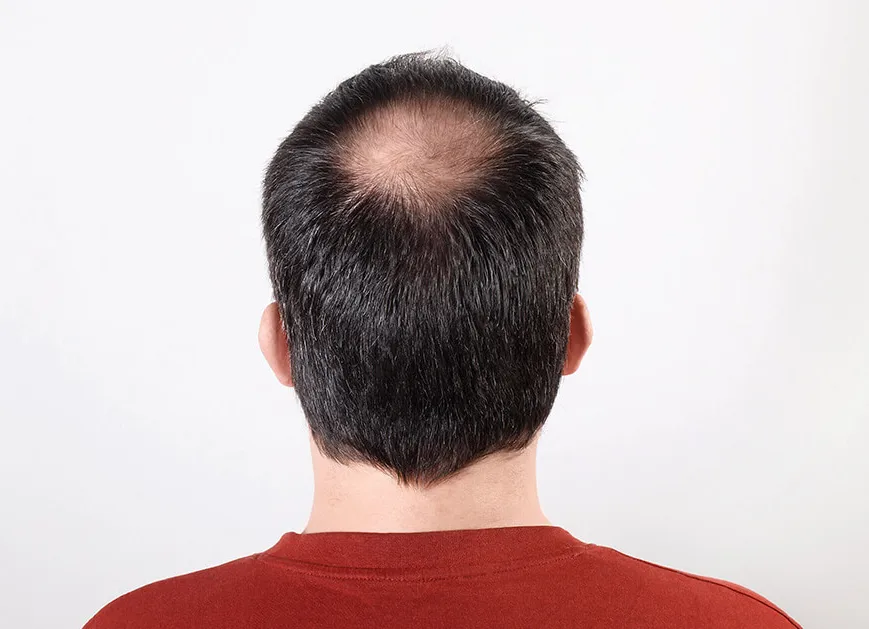
Are you noticing hair loss or bald spots on your crown? Thinning or balding at the crown, also called the vertex, is one of the common forms of hair loss. The head crown might go unnoticed. But, because this part sits at the top and back of the scalp, it’s highly visible in photos and mirrors. Many people find that this area continues to expand over time, creating a bald spot. This area is generally hard to conceal with styling too. Fortunately, there’s crown hair transplant, one of the most effective solutions that can restore density and bring back coverage in this region.
If you are looking to explore crown hair restoration, Hair Restoration Seattle stands at the forefront with Dr. Javad Sajan’s expertise. He is a renowned cosmetic surgeon with specialization in hair restoration procedures for Olympia patients. Focusing on advanced and natural looking crown hair transplant techniques, our team helps you reclaim your hairline and self confidence.
6-8 hours
5-7 days
$4.5/graft
$5/graft
Most people experience crown thinning due to androgenetic alopecia, also known as male or female pattern hair loss. This condition is driven by genetics and hormonal sensitivity, causing hair follicles in certain areas, including the vertex, to gradually shrink and produce finer, shorter strands.
Over time, shedding outpaces regrowth, creating the characteristic circular thinning pattern at the top of the scalp. While medications can help slow this process, many patients reach a point where they want a more definitive solution, such as a transplant.
At the frontal hairline, hair grows in a straightforward direction. Whereas, the crown features a whorl or spiral pattern. This natural swirl determines how transplanted follicles must be placed to achieve a seamless and realistic look. Because of this:
These characteristics make crown work more complex, but when done well, results can be exceptionally natural.
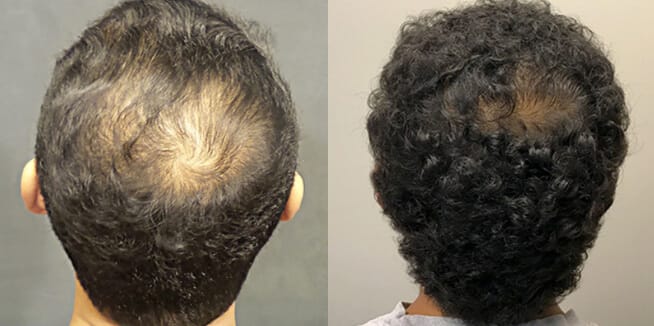
It is a minimally invasive process in which hair is extracted from a donor area (usually sides or back of head). The hair is then transplanted to the crown. The procedure is performed using a fine, specialized instrument that helps reduce visible scarring and creates a smooth, natural result. It’s an excellent choice for patients who want a subtle, minimally invasive treatment option.
This method is well-suited for people with advanced hair loss or larger areas requiring coverage. It involved removing a small strip of scalp from the donor region, from which healthy hair follicles are harvested and then placed into the crown. Smart FUT makes it possible to transplant a higher number of grafts in one session, making it an excellent choice for patients who need more comprehensive restoration.
Both the techniques can be used to restore the crown. The choice depends on your goals, donor hair quality, and expectations for scarring and recovery.
The surgeon maps out the natural swirl direction, designing placement that mimics your original hair’s rotation.
Grafts are taken from areas resistant to pattern loss, usually the back of the scalp.
Each follicle is placed at the correct angle to match the crown’s spiral, ensuring that once grown out, the hair blends seamlessly.
Most patients resume normal daily activities in a few days. Early shedding is normal, with visible growth beginning around three months and maturing fully over 12-18 months.
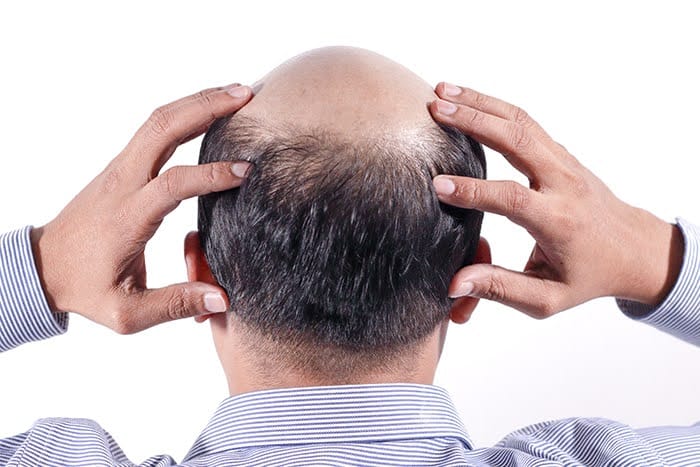
Because the crown covers a larger surface area and requires layered density, it often needs more grafts than a hairline procedure. Depending on the size of the thinning region, the average range is:
A personalized evaluation is essential to determine what will work best for your unique situation.
You may be a good candidate if:
Your surgeon will assess your long-term pattern of hair loss to ensure a strategy that maintains balance over the years.
A properly executed crown hair transplant produces:
Because crown hairs grow in multiple directions, the surgeon’s artistic eye and technical skill are key to achieving a realistic look.
If you’re noticing thinning or a widening bald spot at the top of your scalp, a crown hair transplant can make a big difference in how you look and feel. For expert evaluation, for your and crown hair restoration in Olympia, visit our website https://hairrestorationseattle.com/.