Crown Hair Transplant Portland
Hair loss at the crown can be upsetting. The crown, also known as the vertex, is one of the most common areas where hair thinning occurs. Because of the location of the crown, many people don’t even notice the changes right away. They might first see more scalp under bright lights, notice changes in photos, or feel that the swirl at the back of their head looks thinner than before.
Many people in Portland try temporary solutions like thickening shampoos, styling fibers, or powders. These options can help for a short time, but they do not address the underlying hair loss. When thinning continues, people often start exploring more permanent options like transplants. If you are looking for a crown hair transplant, Hair Restoration Seattle offers advanced treatment options. We focus on natural coverage and long-term planning.
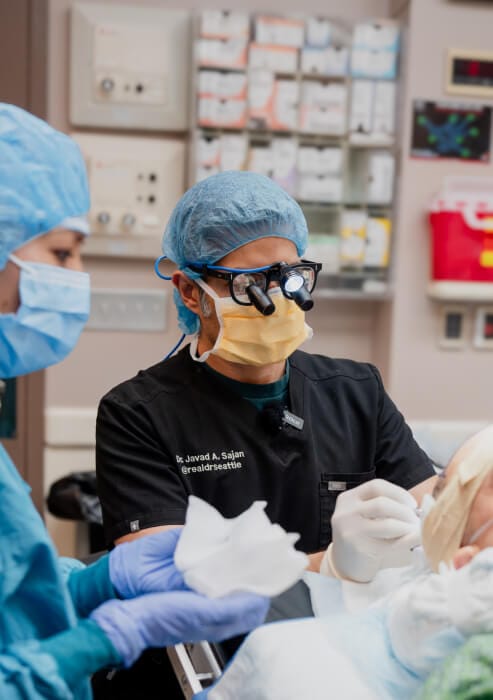
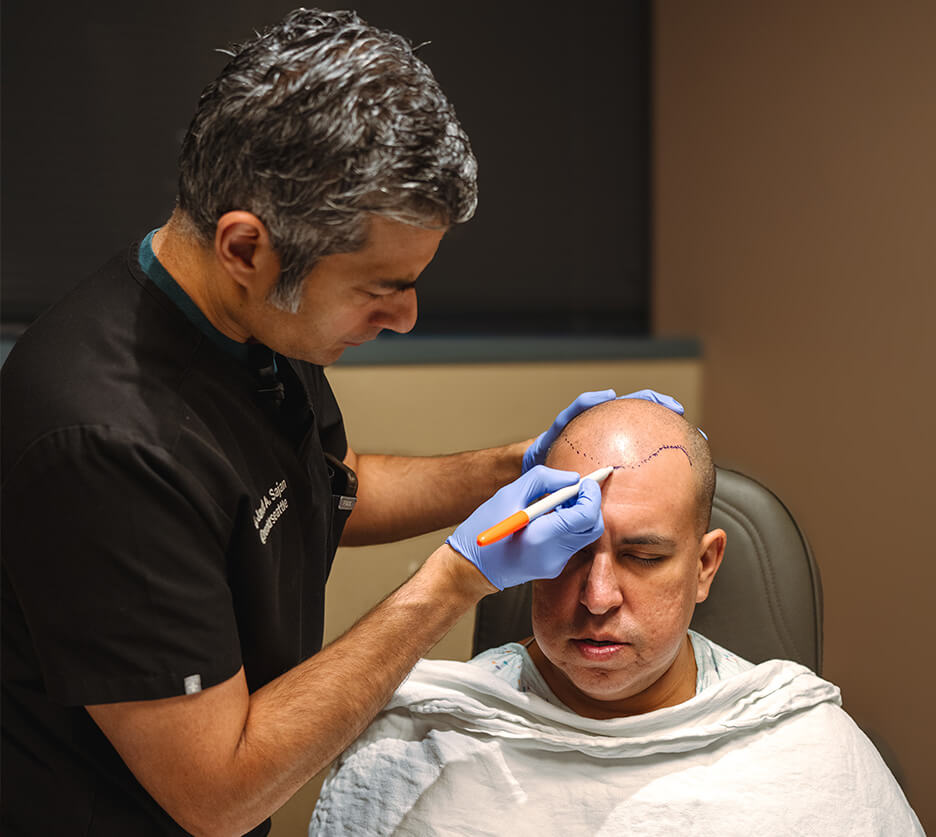
Under the care of Dr. Javad Sajan, each crown restoration plan is designed to match your natural hair growth pattern and support results that look realistic, not overdone. Every plan begins with a detailed evaluation of your crown, donor area, and future hair loss risk. The goal is to restore coverage now while making smart decisions that protect your donor hair for the years ahead.
6-8 hours
5-7 days
$4.5/graft
$5/graft
What Causes Crown Hair Loss?
- High stress or illness that triggers shedding
- Poor sleep or rapid weight changes
- Thyroid conditions
- Low iron or low vitamin D levels
- Ongoing scalp irritation or dandruff
- Tight hairstyles that pull on hair
- Certain medications
Dr. Sajan’s Real patients
Dr. Sajan’s approach focuses on natural-looking outcomes that blend with existing hair. Patients often choose crown restoration because it helps them feel more confident in everyday situations, from work meetings to social events.

How Is the Crown Different From Other Parts of the Scalp?
The crown behaves very differently from the hairline or mid-scalp. This makes crown restoration more complex. The crown has a natural swirl, also called a whorl. Hair grows in a circular pattern, changing direction as it moves around the center. A surgeon must recreate this flow. Even small mistakes in angle or direction can stand out once the hair grows.
Because the hair grows outward in a spiral pattern, the scalp becomes visible more quickly in this area. Even when there is decent density, the swirl can appear thinner, especially under bright or overhead lighting. This makes realistic density goals important.
Hair loss in the crown also tends to progress over time. Some people notice thinning at the front first and the crown later, while others see crown loss early on. A well-planned approach considers future changes so results stay balanced as hair loss evolves.
How Does a Crown Hair Transplant Work?
Graft Harvesting
Follicles are removed using either FUE or FUT. Dr. Sajan prepares each graft under magnification and sorts them by hair count and quality.
Recipient Site Creation
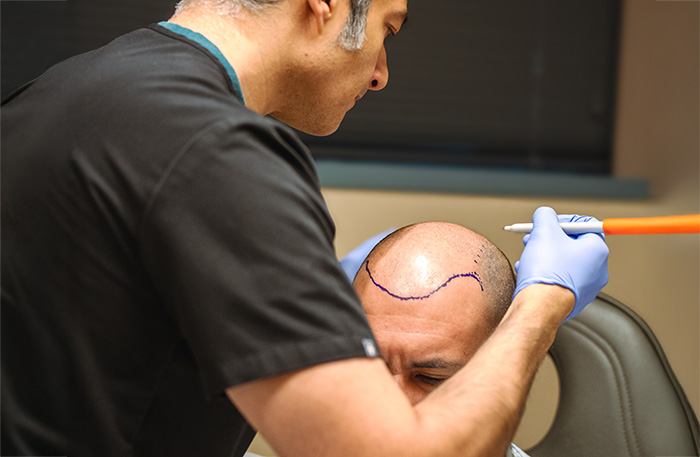
Tiny openings are created in the crown following the natural swirl pattern. The angle, depth, and spacing of each site determine how natural the final result looks.
Placement and Aftercare
Grafts are placed carefully into the prepared sites. You leave with detailed aftercare instructions and a follow-up plan to monitor healing and growth.
Graft Harvesting
Follicles are removed using either FUE or FUT. Dr. Sajan prepares each graft under magnification and sorts them by hair count and quality.
Recipient Site Creation
Tiny openings are created in the crown following the natural swirl pattern. The angle, depth, and spacing of each site determine how natural the final result looks.
Placement and Aftercare
Grafts are placed carefully into the prepared sites. You leave with detailed aftercare instructions and a follow-up plan to monitor healing and growth.
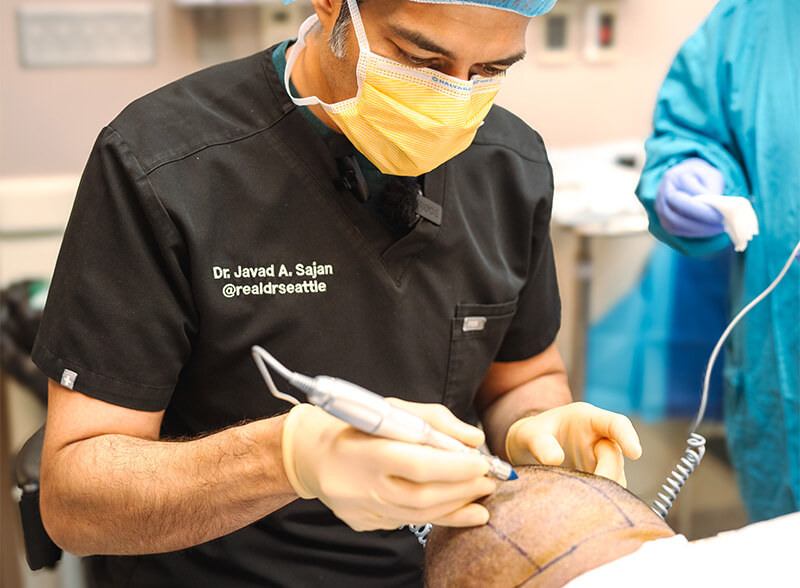
What Is FUE Hair Transplant?
FUE, or follicular unit extraction, removes individual follicular units from the donor area using a small punch. These grafts are then implanted into the crown. Many patients choose FUE because:
- There is no linear scar
- Shorter hairstyles are easier to wear
- The donor area feels less tight after surgery
- Grafts can be taken from a wider donor zone
FUE works well for crown thinning, especially when blending with existing hair. However, donor management is important. Removing too many grafts can thin the back and sides.
What Is FUT Hair Transplant?
FUT, also called the strip method, involves removing a thin strip of scalp from the donor area. The strip is divided into individual grafts, and the donor area is closed with a fine-line technique. FUT may be recommended when:
- A larger number of grafts is needed
- Preserving donor strength is a priority
- You wear your hair long enough to hide a thin scar
Here are some important considerations for this method:
- A linear scar
- A slightly longer tight feeling during early healing
- Limits on very short hairstyles in some cases
Dr. Sajan will help you choose the method that fits your crown needs and lifestyle.
How Many Grafts Does the Crown Need?
The crown often requires more grafts than people expect. The swirl spreads hair in many directions, so coverage takes planning. Typical ranges include:
- Small crown thinning: 800–1,200 grafts
- Moderate crown loss: 1,200–2,000 grafts
- Large crown area: 2,000–3,000+ grafts
Hair characteristics matter. Thick or coarse hair covers more scalp than fine hair. Curly or wavy hair adds visual density. Dark hair on a light scalp can make thinning more visible. Many plans focus on building density at the swirl center first, then blending outward for a smooth transition.
Is a Crown Hair Transplant Right for You?
A crown transplant can help many people in Portland, but it is not right for everyone. Your consultation with Dr. Sajan will answer these questions:
Do you have enough donor hair?
A healthy donor area is required to support both current and future needs.
Is your hair loss pattern stable?
Rapid progression can outpace a transplant. Medical therapy or staged treatment may be recommended.
Are your expectations realistic?
A crown transplant can significantly improve coverage, but it may not fully restore the density you had as a teenager. Patients tend to be most satisfied when the goal is natural-looking improvement.
Good general health, scalp care, and commitment to aftercare are also important.
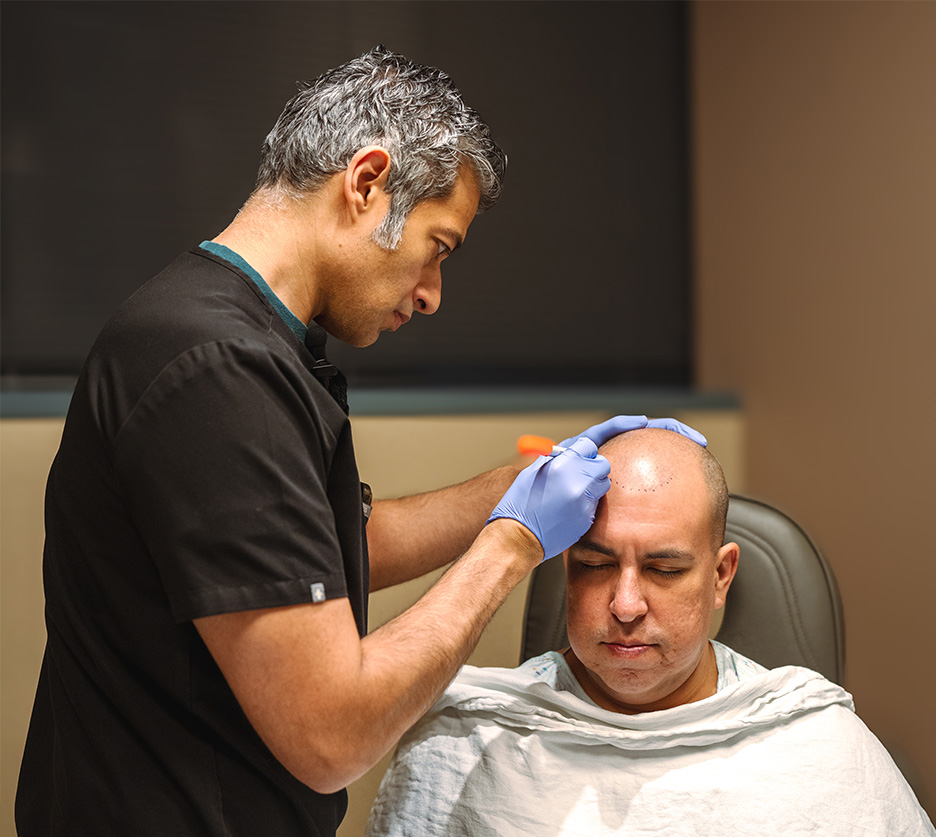
Results Timeline: What to Expect
- Days 1–10: Scabs form and shed; redness fades
- Weeks 2–6: Transplanted hairs shed; follicles remain
- Months 3–4: New growth begins
- Months 6–9: Density improves; styling becomes easier
- Months 12–18: Final crown results for many patients
Crown Hair Transplant for Portland Patients
If thinning at the crown is affecting how you feel about your appearance, you do not have to figure everything out on your own. Start with a professional evaluation and a clear plan. During this process, you can discuss options like FUE or FUT, how many grafts may be needed, and how the natural swirl will be addressed.
Hair Restoration Seattle works with many Portland patients. We can start with a virtual consultation for your convenience before scheduling an in-person visit. To learn more, call (206) 759-5375 or book online.
Frequently Asked Questions for Portland Patients
Q: How long do hair transplants actually last?
Hair transplants are designed to be permanent because the transplanted follicles are taken from areas that are resistant to hair loss.
Q: How much do 3,000 hair grafts cost?
The cost of 3,000 grafts varies by clinic and technique, but it typically depends on the price per graft and whether FUE or FUT is used.
Q: Is it painful to get a hair transplant?
Most patients report little to no pain during the procedure because local anesthesia is used, with only mild soreness afterward.
Q: What are the side effects of hair transplant surgery?
Common side effects include temporary swelling, redness, scabbing, and mild discomfort during the healing period.